Showing posts with label study. Show all posts

Thursday, November 3, 2011

Satan's Viruses, Intent

This is second in a series about malware. Click here for the introduction, here for the previous, and here for the followup.

First, a look at the goal of a programmer. Malware is unlike most software because instead of helping the prepared user, it is designed to hinder the unprepared user. Goals range from almost innocent, a bored student seeing if it can be done, to outright malicious, a criminal stealing money, data, or even computer power. Innocent writers may be able to say it was all for good fun, but the general goal is still malicious and often times harmful. Understanding this thought helps prepare Internet users against foolish activities that put themselves and their computers at risk.

Satan has very few goals in "life." He has already failed to follow the plan of salvation, so now he simply tries to make everybody else as miserable as he can. Sometimes it is through causing people to exercise their agency to limit their happiness, other times he tempts people to choose to inflict pain and trials on others. His ultimate goal is to tempt people away from God, and he will do everything he can to do that. He authors temptations that lead to addictions, that hurt other people, and that satisfies temporary desires in exchange for lasting consequences. He also jumps on legitimate trials, and tries to argue against the natural process of overcoming challenges and growing from them.

Understanding the goal of something helps us know how to deal with it. Just as knowing that a company wants to make money will help you be skeptical of promises of unlimited cash in exchange for a down payment, knowing that Satan wants to hurt us will keep us aware that what he offers us is not going to help us out. The scriptures tell us that he teaches a man not to pray (2 Nephi 32:8), that he will not tempt us to do good (Moroni 7:12), and that he works according to the person (2 Nephi 28:7-9, 20-22). We need to realize that we are being tempted all the time, and that we can choose to resist this temptation. Knowing why things are happening to us won't automatically protect us from doubt, discouragement, or mistakes, but it will give us tools to overcome those trials.

Tuesday, October 18, 2011

Sacrifice Brings Forth the Blessings of Heaven

Have you ever seen or heard of somebody doing something ridiculously difficult, weird, or otherwise some kind of sacrifice? For instance, as a missionary I am basically sacrificing two years of my life, and two years that are normally highly productive for today's youth. However, there is also a saying that serving a mission is not a sacrifice because of the bountiful blessings received because of my service. Today I want to share my opinion on sacrifice and what it really means.

Painting of Joseph Smith Jr.
First, I'd like to talk about Joseph Smith the prophet. He went through many trials, and he undoubtedly sacrificed many things, from comfort to safety. The church he helped found, The Church of Jesus Christ of Latter-day Saints, now honors him for the work he did and his worthiness to be the first prophet of this dispensation. One of the ways we do this is through the hymn Praise to the Man, from which this post gets its title. I feel that what Joseph Smith did was a great sacrifice, and because of his courage and call as a prophet we are all able to partake of the "blessings of heaven." I also feel that the idea of sacrifice can extend into our lives so much farther.

We gain nothing on this earth without some element of sacrifice. When we earn something, we sacrifice time, money, and sometimes more to receive that something. I know that many people that view things differently, preferring to view earning something as just that. In this regard, I disagree with them without wanting to change their point of view. Instead, I think that realizing everything we do is a sacrifice of some sort, either through lost time if we choose to relax or lost energy if we choose to work or some similar sacrifice, will help us make better decisions as we look forward at the consequences. We need to choose consequences, not actions, and we have been given advice on what actions have the best consequences through the prophets and the scriptures. I encourage you to seriously consider learning what they have to say and applying their teachings to your life. Ask me a question, or ask missionaries to visit you.

Tuesday, October 4, 2011

Constant Communication

The top line is the transmitter, bottom the receiver. Despite
knowing this, it took me forever to even transmit numbers.

In the field of remote controls, I know very little. However, I have taken a class where one of the projects was to use an infrared (IR) transmitter and receiver that taught me a little bit about how it could work. The IR light source blinks at a certain frequency for certain amounts of time, with the time the frequency was active determining what is being transmitted. After the information was transmitted, I had a few options: keep transmitting, stop and hope the message got through the first time, or throw your hands up in frustration because the microchip instructions weren't clear enough to understand the first twelve times you read it. I eventually got that project done, but another activity I took a part of was a FIRST Robotics competition that taught me a bit more about electronic communication. In each match, there were two periods, one where the competitors could use a remote control similar to what I'd already done and another where competitors could use wireless to directly control a robot. The differences between these two periods and what happened was stark.

When a remote control was used, because it was not constant communication, weak, or poorly designed the robot often would start doing what the driver wanted it to do and then either stop or do something completely wrong. Meanwhile, when the second period of play was active the robot did almost exactly what the driver expected due to the much higher quality of communication. In our lives, we also have a driver of sorts and lines of communication between us and Him. Instead of the communication always being started by the driver, however, in our lives we are the controllers of how we communicate, and (because we can't choose consequences) also how we fair on the playing field of life.

If we only communicate with God occasionally, waiting for when his prophets speak to us or when we feel like it, we will likely find ourselves going an entirely different direction then the one that is best for us. Likewise, if we exercise constant prayer we will be much more sensitive to the instructions we receive, either through personal revelation or a more general message. In the end we always have a choice in the matter, just as the robot is still programmed a certain way and acts according to how the program directs before the driver does, but if our hearts are correctly tuned we will find ourselves on the correct path that our Driver knows will best help us. We have just taken part in General Conference, a wonderful opportunity to receive concentrated revelation from the prophets, but we still need to keep listening, and continue to pray and read. Just as constant communication helps robots work and fulfill their goals, so will it bless our lives with clarity and ability.

Wednesday, September 28, 2011

Prophets and Scriptures

First, a quote from Joseph Smith. "We believe the Bible to be the word of God as far as it is translated correctly; we also believe The Book of Mormon to be the word of God" (Articles of Faith, number 8). I understand that for many people, the Bible is the greatest book on the earth, filled with God's revealed words to his prophets. I, and all of The Church of Jesus Christ of Latter-day Saints, consider the Bible to hold the gospel of Jesus Christ and an accurate rendering of history. However, we also know that it is imperfect. One religious scholar wrote on the history of the Bible as we know it today, and any historian can tell you that the Bible has been translated many times. One example of a famous mistranslated line is in the Latin Vulgate version, which says that Moses grew horns while on Sinai (further reading). While scholars are certainly going to do their best to fix mistakes, the wear of time makes it more and more difficult to know what the Bible originally said.

As members of the LDS Church, we know that there is a prophet on the earth today. We do not need to rely solely on a Bible that was written thousands of years ago when we have a prophet speaking to God today and telling us what we need to hear, just as prophets did while the Bible was first written. The idea of prophets is not a new one, and it confuses me that people will be reluctant to accept our message as true just because we say that Jesus Christ has called a prophet on the earth again. Not only does God not change (2 Nephi 29:9), but humankind does change. Just as there was a prophet after Abraham (Isaac), Moses (Joshua), and so many others, we need a prophet to help us deal with credit cards, computers, universities and other things that are unique to our day (3 topics I chose and then searched for relevant talks. You can do it too at lds.org).
These are 12 of the 15 men that lead this Church through divine guidance

There are so many instances in the Old Testament of prophets because it covers such a large period of time. However, even the New Testament has examples of prophets in the form of the Apostles of Jesus Christ. Peter, the primary Apostle, filled a similar if not the same role as Thomas S. Monson does today. When there was an issue that individuals couldn't solve for the early church (gentiles and more), they appealed to Peter and he answered their questions. Apostles helped the church grow and taught true doctrine. This pattern has returned to the earth today, and is ready to bless your life. You don't even have to take my word for it. Just start with The Book of Mormon and meeting with missionaries.

Saturday, August 20, 2011

Challenge

This blog post as I write.
Blogs are a challenge. Writing, even before throwing a blog into the mix, can be challenging. It involves coming up with ideas, editing them into a readable format, and going through the time and skill it takes to turn the ideas into text. Then comes blogs, with the necessary pressure of writing something for potentially everybody on the Internet, be they dearest of friends or strangers with malignant intent. I don't mean to simply complain; writing this blog is requiring skills and thoughts that I have never used before, and so I write without the full amount of confidence I would like. However, I know a few things that make this easier. I know the truth of the message I share. I know how it can help your life. I know what it's like to read something online. I know that you are at the potential beginning of wonderful things to come.

I now submit a challenge to you: read the Book of Mormon (it's free!). I can't make you do it, but I can tell you that if I am writing a blog, you can do the simple thing and read a book with the hope to learn something new and true. If you truly desire for a better understanding of things or how you can have more happiness in your life, you will find what you are looking for in this book. I know that the message I share is true, has blessed my life, will bless yours if you allow it, and all you need to do to know for yourself the same thing is to start by reading the Book of Mormon.

Monday, August 1, 2011

Thermite: Rust


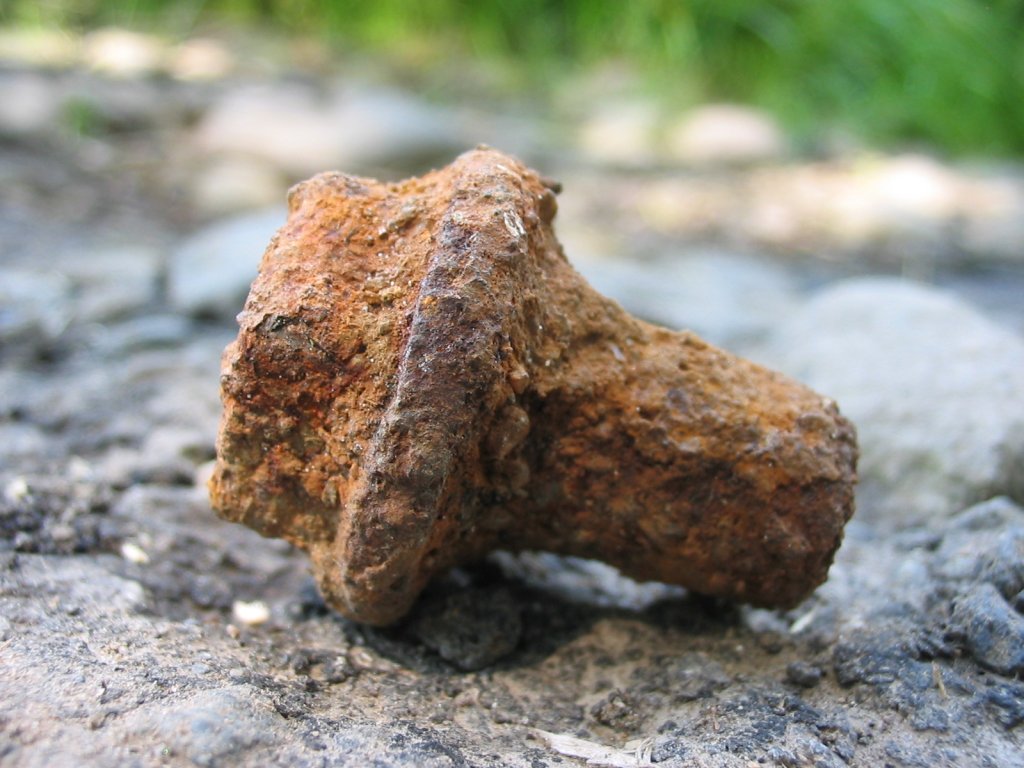
To begin this comparison, we'll start with rust. It is by far the most common ingredient. Anybody can find rust, and many times it is an unwanted thing. However, rust itself won't work. It needs to be fine enough, and if it is really just dirt or impure it won't work.

As to the Gospel, this is study. Just as with rust, anybody can find time for study, many people dislike it, and studying things that aren't true will make the final reaction a dud.

In order to prepare yourself for your personal "thermite reaction", you must read the scriptures and other sources of truth. But how can you know if what you are studying is true? The answer is in the final reaction. If it works, it must have been good. This is the same principle found in Matthew 7:15-18. If what you study brings forth good fruit (a successful and awesome reaction), then it must be good.

I want you to study the Book of Mormon. The reaction that I want to prepare you for includes knowledge concerning the Book of Mormon, whether it is true or not. The first step is studying it, which is more than just reading it. According to Moroni 10:3, you need to ponder it as well, which means to meditate and think deeply on what it says. When the Book of Mormon talks about God "[consecrating] thine afflictions for thy gain," (2 Nephi 2:1-2) consider how your life may have been shaped for the better by things that you've suffered through. This applies to all aspects of the Book of Mormon, and the more of this you do the more prepared you will be.

On the other hand, I do not think that studying material designed to create doubt, fear, or hatred will be beneficial. There are many people who desire to study something from all angles before they do anything, but they find things that are created for the intent of ruining your faith before it starts. These would be as helpful as gathering dirt for your thermite, for it creates an atmosphere opposite to what is needed for the later ingredients. You can study all you want, but don't look for the things that will ruin the reaction. If you do find something worrisome, make sure that it is truth and not slander, fact and not supposition. Ask your missionaries and listen to what they have to say.

If you get the right kind of rust, you'll know by the power of the reaction in the end. However, rust doesn't make the thermite burn. It only supplies the oxygen in a quick and ready source for the reaction. The reaction really takes place in the aluminum.
Related Posts Plugin for WordPress, Blogger...